
Cold plastic road marking paint is a two-component, resin-based marking material that cures through a chemical reaction at ambient temperature, without requiring heating. It is valued for its fast curing time, high durability, and ability to be applied in conditions where hot thermoplastic application isn’t practical, making it a preferred choice for pedestrian crossings, complex markings, and roads requiring minimal disruption.
Table of Contents
ToggleWhat Is Cold Plastic Road Marking Paint?
Cold plastic road marking paint, also known as cold plastic pavement marking material, is typically a two-component system consisting of a resin base and a hardener (catalyst) that are mixed on-site just before application. Unlike thermoplastic paint, which must be heated to a molten state before use, cold plastic cures through a chemical reaction between its components at normal outdoor temperatures — hence the name “cold” plastic.
This chemical curing process allows cold plastic markings to achieve full hardness and durability relatively quickly, often within 15 to 30 minutes depending on ambient temperature and formulation.
How Does Cold Plastic Road Marking Paint Work?
- The resin base and hardener components are measured and mixed in the correct ratio immediately before application.
- The mixed material is applied to the prepared road surface using extrusion, screed, or spray equipment, depending on the marking type and thickness required.
- Reflective glass beads are dropped onto the wet surface to enhance night-time visibility.
- The chemical reaction between the resin and hardener causes the material to cure and harden without external heat, bonding firmly to the pavement.
- Once cured, the marking is immediately trafficable, minimizing road closure time.
Key Benefits of Cold Plastic Road Marking Paint
- No Heating Required Because curing happens through a chemical reaction rather than heat, cold plastic can be applied without specialized heating equipment, simplifying logistics for certain projects.
- Fast Curing and Quick Reopening Cold plastic markings typically cure faster than conventional paints, allowing roads to be reopened to traffic sooner and reducing overall project downtime.
- High Durability and Skid Resistance Cold plastic forms a thick, robust film that resists wear from heavy traffic, and its surface texture can be engineered to provide additional skid resistance where needed.
- Excellent for Complex or Detailed Markings Its consistency and application flexibility make cold plastic well suited for detailed markings such as pedestrian crossings, arrows, symbols, and lettering that require sharp, precise edges.
- Strong Adhesion on Various Surfaces Cold plastic bonds effectively to both new and aged asphalt as well as concrete surfaces, making it adaptable across different pavement conditions.
- Long Service Life The dense film thickness typical of cold plastic markings contributes to a longer service life compared to standard water-based or solvent-based paints.
Cold Plastic vs. Thermoplastic Road Marking Paint
While both are durable, long-lasting marking materials, they differ in application method and best-use scenarios:
- Curing Method: Thermoplastic requires heating to a molten state; cold plastic cures via chemical reaction at ambient temperature.
- Equipment Needs: Thermoplastic requires heating kettles and hot application equipment; cold plastic requires precise mixing equipment for its two components.
- Application Precision: Cold plastic is often preferred for detailed, high-precision markings like crosswalks and symbols due to its workability.
- Typical Use Cases: Thermoplastic is commonly used for long, continuous highway lines, while cold plastic is frequently chosen for complex urban markings, pedestrian crossings, and locations where hot application is less practical.
Both materials offer strong durability and are selected based on the specific project requirements, surface conditions, and marking complexity.
Where Is Cold Plastic Road Marking Paint Commonly Used?
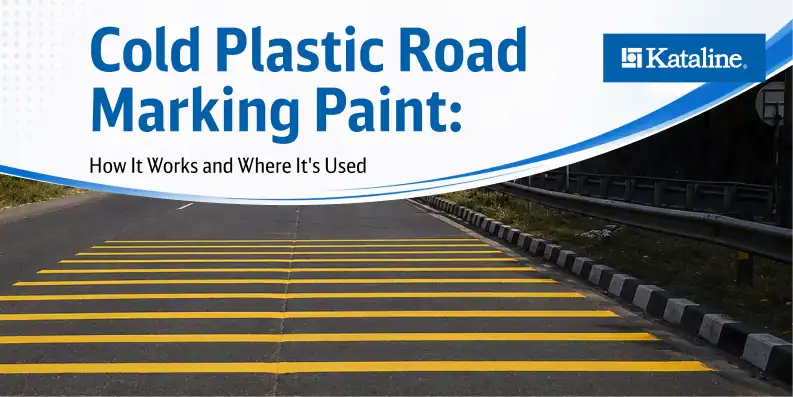
- Pedestrian crossings and zebra markings, where precise, sharp edges are required
- Arrows, symbols, and directional lettering on roads
- Urban intersections with complex, multi-directional markings
- Roundabouts requiring detailed lane guidance
- Parking lot markings needing durable, well-defined lines
- Roads where minimal traffic disruption during application is a priority
Conclusion
Cold plastic road marking paint offers a durable, fast-curing alternative to heated thermoplastic systems, particularly well suited to detailed markings, pedestrian crossings, and urban intersections. Its chemical curing process, strong adhesion, and quick reopening time make it a valuable option in a road authority’s or contractor’s marking material toolkit, complementing thermoplastic paint rather than replacing it.
Frequently Asked Questions
Does cold plastic road marking paint require heating?
No – cold plastic cures through a chemical reaction between its resin and hardener components at ambient temperature, without the need for heating equipment.
How long does cold plastic road marking paint take to cure?
Curing time varies by formulation and temperature but is typically in the range of 15 to 30 minutes, allowing roads to be reopened quickly.
Is cold plastic more durable than regular paint?
Yes, cold plastic generally offers greater durability and a longer service life than standard water-based or solvent-based road paints due to its thicker, more robust film.
What is cold plastic road marking paint best used for?
It is commonly used for pedestrian crossings, symbols, arrows, roundabouts, and other detailed or precision markings where sharp edges and durability are both required.
Is cold plastic better than thermoplastic paint?
Neither is universally “better” – the choice depends on the project. Thermoplastic is often preferred for long, continuous highway lines, while cold plastic is favored for detailed, precision markings and situations where hot application isn’t practical.
Latest Blogs
-
 Coloured Road Surfacing Explained: Uses in Cycle Lanes, Bus Lanes & Traffic Calming
 -
 Cold Plastic Road Marking Paint: How It Works and Where It's Used
 -
 Airfield Marking Paint: Types, Standards & Why Airports Need It
 -
 High Friction Road Surfacing: What It Is and Why It Improves Road Safety
 -
 What Is a Black Spot on the Road? Meaning, Causes & How to Identify One
 -
 What Is Thermoplastic Road Marking Paint? A Complete Guide to Safer and More Durable Road Markings