Table of Contents
ToggleIntroduction
Road markings play a crucial role in guiding drivers, improving traffic flow, and enhancing road safety. Whether on highways, city roads, airports, or industrial facilities, clear and durable road markings help reduce confusion and accidents.
Among the various marking materials available today, thermoplastic road marking paint has become the preferred choice for road authorities, contractors, and infrastructure developers due to its durability, visibility, and long-term cost-effectiveness.
In this guide, we’ll explore what thermoplastic road marking paint is, how it works, its benefits, and why it is widely used across modern transportation infrastructure.
What Is Thermoplastic Road Marking Paint?
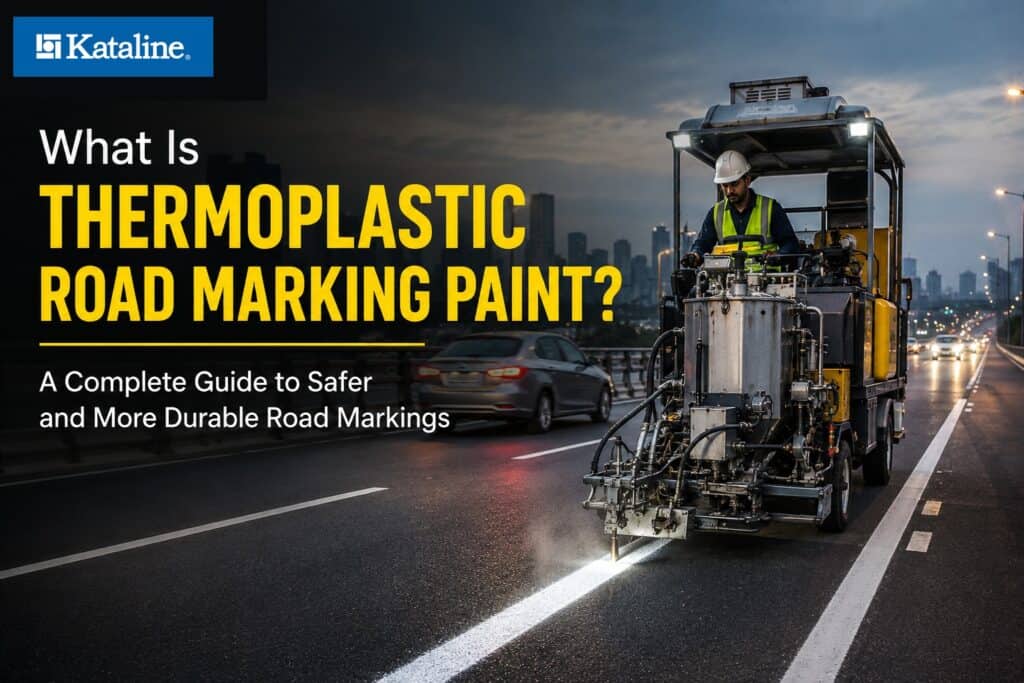
Thermoplastic road marking paint is a specialized road marking material made from synthetic resins, pigments, fillers, and glass beads. Unlike conventional paints that dry through evaporation, thermoplastic material is heated to a molten state and applied to the road surface.
Once applied, it cools rapidly and forms a tough, durable marking that adheres strongly to the pavement.
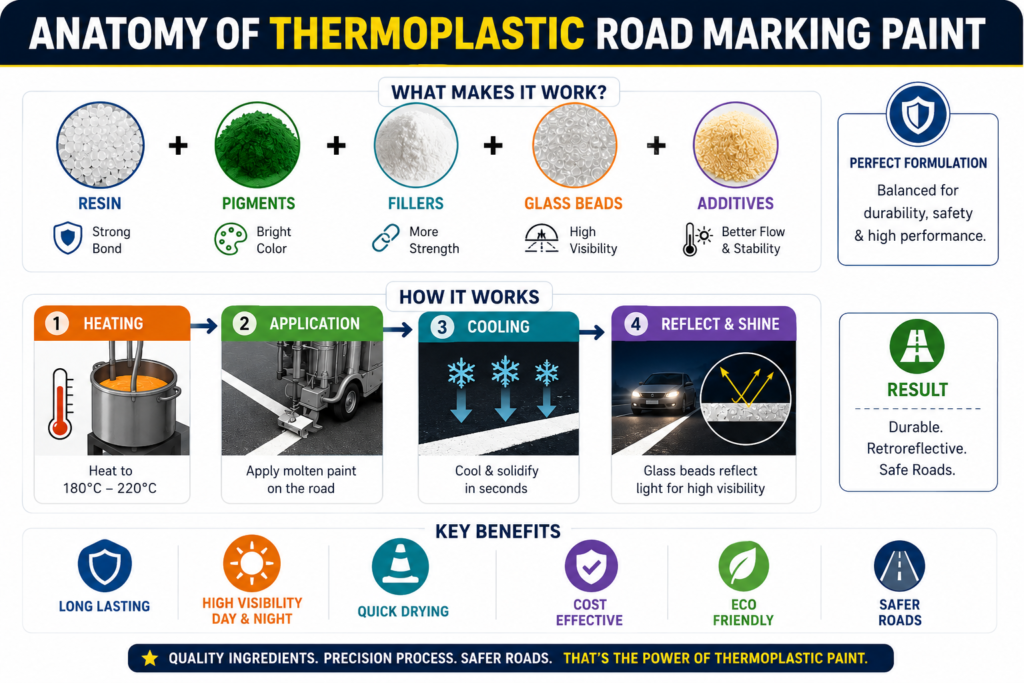
The material is typically heated to temperatures between 180°C and 220°C before application. This process creates highly visible markings that can withstand heavy traffic and harsh weather conditions.
How Thermoplastic Road Marking Paint Works
The application process involves heating the thermoplastic material until it becomes liquid.
The molten material is then applied using specialized road marking equipment. As it cools, it hardens into a solid layer firmly bonded to the pavement surface.
To improve night-time visibility, glass beads are often incorporated into the material or dropped onto the surface during application. These beads reflect vehicle headlights back toward drivers, improving visibility in low-light conditions.
Key Components of Thermoplastic Road Marking Paint
1. Synthetic Resin
The resin acts as the binding agent, providing adhesion and durability.
2. Pigments
Pigments provide the desired color, typically white or yellow, ensuring clear lane guidance.
3. Fillers
Fillers improve strength, wear resistance, and overall performance.
4. Glass Beads
Glass beads enhance retroreflectivity, making markings visible during night driving and adverse weather conditions.
5. Additives
Various additives improve flexibility, weather resistance, and application characteristics.
Benefits of Thermoplastic Road Marking Paint
Superior Durability
One of the biggest advantages of thermoplastic road markings is their ability to withstand heavy traffic and environmental stress.
Compared to conventional paints, thermoplastic markings can last several years with minimal maintenance.
Excellent Visibility
Bright colors combined with reflective glass beads ensure excellent visibility during both day and night.
Cost-Effective Over Time
Although the initial installation cost may be higher than traditional paint, the longer lifespan significantly reduces maintenance and repainting expenses.
Fast Drying Time
Thermoplastic material cools and hardens quickly, allowing roads to reopen to traffic in a short period.
Weather Resistance
The material performs well under varying climatic conditions, including heat, rain, and heavy traffic loads.
Enhanced Road Safety
Clear and highly visible markings help drivers make better decisions, reducing the likelihood of accidents.
Applications of Thermoplastic Road Markings
Thermoplastic road marking paint is used across various sectors:
Highways and Expressways
Lane markings, edge lines, arrows, and safety markings.
Urban Roads
Traffic lanes, pedestrian crossings, and parking guidance.
Airports
Runway markings, taxiway markings, and apron guidance systems.
Industrial Facilities
Warehouse traffic management and safety zones.
Parking Areas
Directional arrows, parking bays, and pedestrian pathways.
Toll Plazas
Traffic channelization and lane guidance markings.
Thermoplastic Road Marking Paint vs Conventional Road Paint
| Feature | Thermoplastic Markings | Conventional Paint |
|---|---|---|
| Durability | High | Moderate |
| Visibility | Excellent | Good |
| Reflectivity | Excellent | Moderate |
| Maintenance Frequency | Low | High |
| Lifespan | 3–5+ Years | 6–18 Months |
| Initial Cost | Higher | Lower |
| Long-Term Cost | Lower | Higher |
Factors Affecting Performance and Lifespan
Several factors influence how long thermoplastic road markings remain effective:
Traffic Volume
Heavy traffic increases wear and tear.
Road Surface Condition
Properly prepared surfaces improve adhesion and longevity.
Climate Conditions
Extreme temperatures and rainfall can impact performance.
Application Quality
Professional installation ensures optimal thickness and bonding.
Glass Bead Quality
High-quality beads improve long-term reflectivity.
Best Practices for Application
To maximize performance, contractors should:
- Ensure the road surface is clean and dry.
- Use calibrated application equipment.
- Maintain proper application temperatures.
- Apply the recommended thickness.
- Use quality-certified glass beads.
- Follow relevant road marking standards and specifications.
Proper application helps achieve maximum durability, visibility, and safety benefits.
Why Thermoplastic Markings Are Preferred for Modern Roads
As governments and infrastructure agencies focus more on road safety, thermoplastic road markings continue to gain popularity.
Their combination of durability, reflectivity, and low maintenance requirements makes them ideal for:
- National highways
- Expressways
- Smart city projects
- Airport infrastructure
- Industrial facilities
- Urban road networks
The ability to provide clear guidance under various driving conditions makes thermoplastic markings an essential component of modern road safety systems.
Conclusion
Thermoplastic road marking paint has become the industry standard for durable, high-performance road markings. Its superior visibility, long lifespan, and excellent resistance to traffic and weather make it a preferred choice for highways, city roads, airports, and industrial facilities.
As road safety requirements continue to evolve, investing in high-quality thermoplastic road marking solutions can significantly improve visibility, traffic management, and overall roadway safety.
At Kataline, we provide advanced road marking materials designed to deliver long-lasting performance, superior reflectivity, and enhanced road safety. Whether you’re working on highways, urban roads, airports, or industrial projects, our solutions help create safer and more efficient transportation infrastructure.
Contact Kataline today to learn more about our thermoplastic road marking products and road safety solutions.
FAQ's
What is thermoplastic road marking paint?
Thermoplastic road marking paint is a durable road marking material that is heated, applied in molten form, and hardened on the road surface to create long-lasting markings.
Why is thermoplastic road marking paint used?
It provides superior durability, visibility, reflectivity, and resistance to weather and traffic compared to conventional road paints.
How long do thermoplastic road markings last?
Depending on traffic conditions, climate, and application quality, thermoplastic markings can last between 3 and 5 years or even longer.
Are thermoplastic road markings reflective?
Yes. Glass beads embedded in the material provide retroreflectivity, improving visibility during nighttime driving.
Where are thermoplastic road markings commonly used?
They are widely used on highways, expressways, city roads, airports, parking facilities, and industrial sites.
What temperature is used for thermoplastic application?
The material is generally heated to approximately 180°C–220°C before application.
Are thermoplastic road markings environmentally friendly?
Many modern thermoplastic formulations are designed to be durable and efficient, reducing the need for frequent repainting and maintenance.
How do glass beads improve thermoplastic road markings?
Glass beads reflect vehicle headlights back toward drivers, enhancing visibility during nighttime and low-light conditions.
Latest Blogs
-
Coloured Road Surfacing Explained: Uses in Cycle Lanes, Bus Lanes & Traffic Calming
-
 Cold Plastic Road Marking Paint: How It Works and Where It's Used
 -
Airfield Marking Paint: Types, Standards & Why Airports Need It
-
High Friction Road Surfacing: What It Is and Why It Improves Road Safety
-
What Is a Black Spot on the Road? Meaning, Causes & How to Identify One
-
 What Is Thermoplastic Road Marking Paint? A Complete Guide to Safer and More Durable Road Markings